Vancouver Commercial Backup Power: Your Guide
Last updated: February 26, 2026
When power fails, your facility doesn’t have to. Selecting the right backup power system protects your Vancouver commercial operation from costly downtime, equipment damage, and lost revenue. With Vancouver’s occasional storm-related outages and the growing demand for uninterrupted operations, vancouver commercial backup power solutions have become essential infrastructure rather than optional insurance.
Key Takeaways
- Generator types matter: Standby generators suit facilities needing extended runtime, while UPS systems protect sensitive electronics from momentary interruptions
- Load calculation is critical: Undersized systems fail when you need them most; professional assessment prevents costly mistakes
- Transfer speed varies: UPS systems switch in milliseconds, generators take 10-30 seconds—choose based on your equipment’s tolerance
- Fuel type affects reliability: Natural gas generators start reliably in cold Vancouver winters; diesel requires fuel management
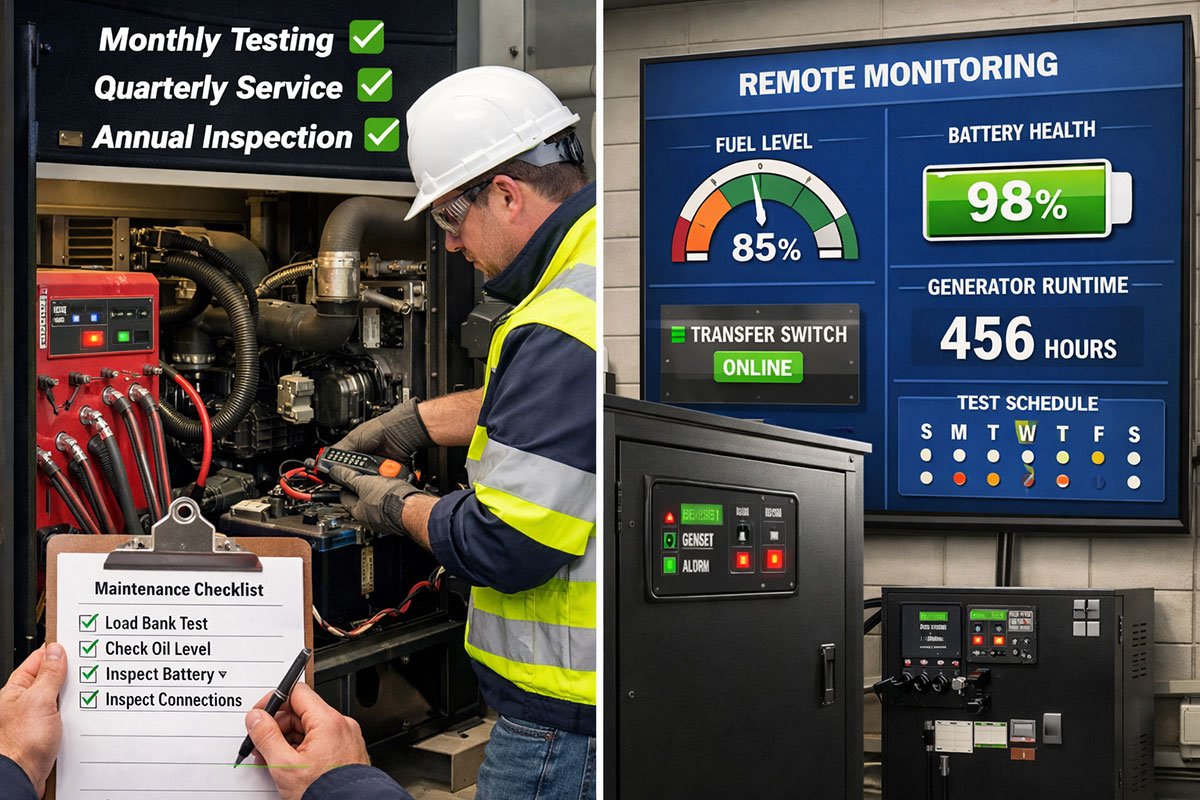
- Maintenance isn’t optional: Monthly testing and quarterly servicing keep systems ready when emergencies strike
- Professional installation matters: Code compliance, proper sizing, and integration require certified electrical contractors
- Budget for total cost: Initial equipment, installation, permits, fuel infrastructure, and ongoing maintenance all factor into ROI
Quick Answer
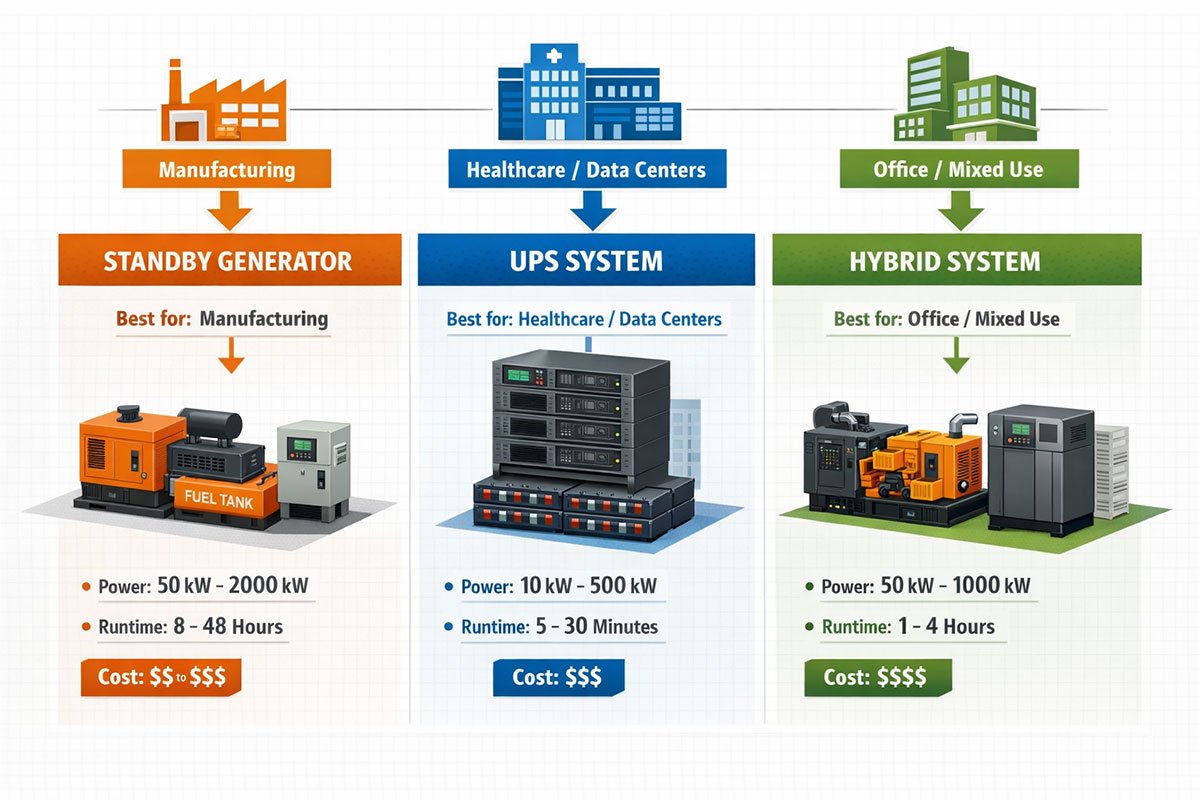
Vancouver commercial facilities need backup power systems matched to their specific load requirements, acceptable downtime tolerance, and budget constraints. Most businesses choose between standby generators (for whole-facility, extended outages), uninterruptible power supplies or UPS (for immediate, seamless protection of critical equipment), or hybrid systems combining both technologies. The right choice depends on calculating your total electrical load, determining which systems absolutely cannot lose power, and understanding transfer speed requirements for your equipment.
What Types of Backup Power Systems Work for Commercial Facilities?
Commercial facilities in Vancouver typically choose from three main backup power categories, each serving different operational needs and budgets.
Standby generators connect to your facility’s electrical system through an automatic transfer switch. When utility power fails, the generator starts automatically and powers selected circuits or your entire facility. These systems run on natural gas, propane, or diesel fuel and provide power for hours or days depending on fuel supply.
Uninterruptible power supplies (UPS) use battery banks to provide instant power when the main supply fails. They switch in milliseconds, protecting sensitive electronics from even brief interruptions. UPS systems typically run for 15 minutes to several hours, giving you time to shut down equipment properly or bridge to generator power.
Hybrid systems combine UPS and generator technologies. The UPS provides immediate power while the generator starts, then the generator takes over for extended runtime. This configuration protects sensitive equipment while ensuring long-term power availability.
Choose a standby generator if your facility can tolerate 10-30 seconds of downtime but needs power for extended periods. Select a UPS if you have servers, medical equipment, or manufacturing processes that fail with any power interruption. Consider a hybrid system if you need both instant protection and long runtime capability.
How Do You Calculate Your Facility’s Backup Power Requirements?
Accurate load calculation prevents the common mistake of installing undersized systems that fail during actual outages.
Start by identifying critical loads—equipment that must continue operating during outages. This might include:
- Refrigeration and cold storage systems
- Computer servers and data centers
- Security and access control systems
- Emergency lighting and exit signs
- HVAC systems (or portions needed for equipment cooling)
- Manufacturing equipment with processes that can’t stop mid-cycle
- Medical equipment in healthcare facilities
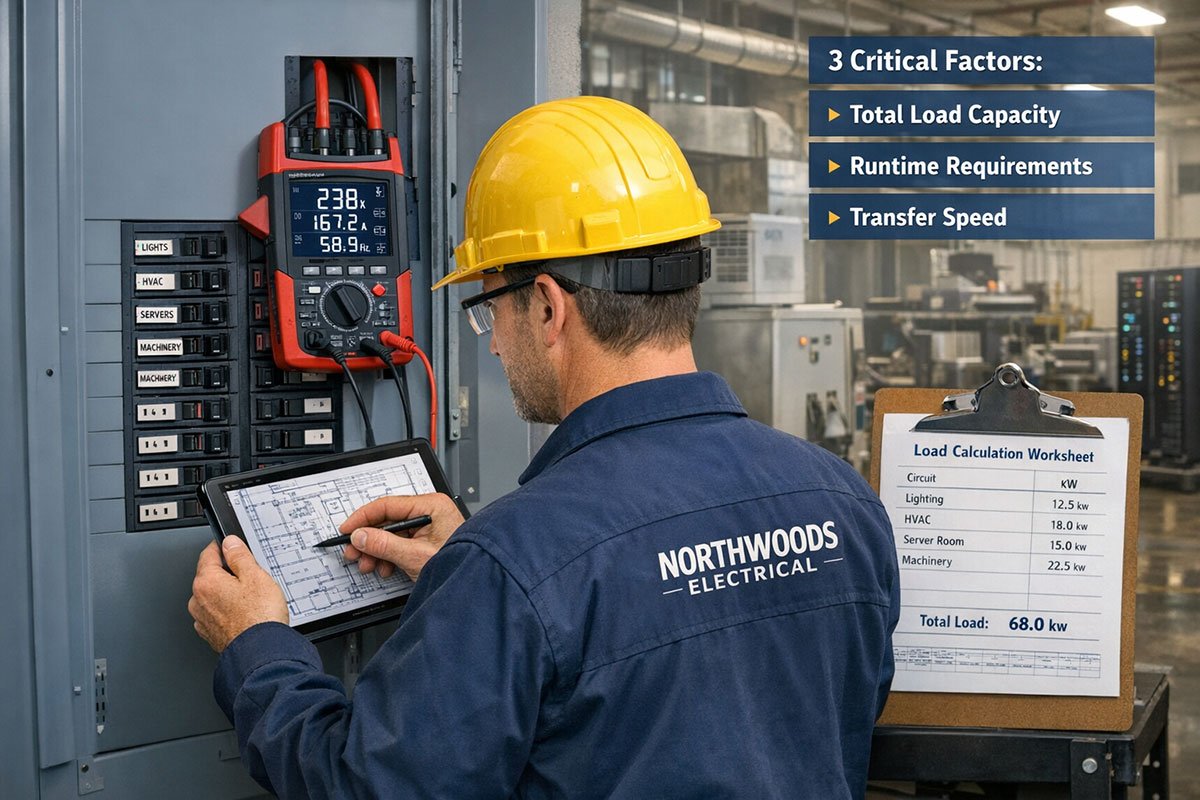
Next, calculate the total wattage for these systems. Check equipment nameplates for running watts and starting watts (motors and compressors need 2-3 times their running power to start). Add 20-25% capacity buffer to account for future growth and prevent running the generator at maximum capacity.
For example, if your critical loads total 40 kW running power and 55 kW starting power, specify a generator rated for at least 70 kW (55 kW × 1.25 buffer).
Common mistake: Forgetting that three-phase equipment requires three-phase generators. Verify your electrical service type before selecting equipment.
Professional electrical contractors like Northwoods Electrical perform detailed load calculations using power monitoring equipment to measure actual consumption rather than relying on nameplate ratings, which often overstate real-world demand.
What Factors Determine the Best Vancouver Commercial Backup Power Solution?
Beyond basic power requirements, several factors influence which system works best for your Vancouver facility.
Transfer speed requirements: Data centers and hospitals need UPS systems that switch in under 4 milliseconds. Manufacturing facilities with robust equipment might tolerate the 10-30 second delay of generator startup.
Runtime needs: If outages in your area typically last 2-4 hours, a UPS with extended battery banks might suffice. If winter storms can cause multi-day outages, generators with large fuel capacity or natural gas connections become necessary.
Fuel availability and storage: Natural gas generators connect to utility lines, providing unlimited runtime without fuel delivery concerns. Diesel generators require on-site fuel tanks (typically 500-2000 gallons for commercial applications) and fuel management to prevent degradation.
Installation space and zoning: Generators need outdoor installation with proper clearances, noise considerations for neighboring properties, and compliance with Vancouver building codes. UPS systems install indoors but require adequate ventilation and floor load capacity for heavy battery banks.
Budget constraints: UPS systems cost $200-$500 per kW for basic models, while standby generators range from $400-$1,200 per kW installed. Hybrid systems cost more initially but provide comprehensive protection.
Choose natural gas if your facility has gas service and you need unlimited runtime. Select diesel if you need portable power or lack gas infrastructure, but budget for fuel management. Pick propane for facilities in areas without natural gas service.
How Does Professional Installation Impact System Reliability?
Proper installation by certified contractors determines whether your backup power system functions correctly when you need it most.
Code compliance isn’t optional. Vancouver electrical installations must meet Canadian Electrical Code requirements, including:
- Proper transfer switch sizing and installation
- Adequate grounding and bonding
- Correct generator placement with required clearances
- Fuel system installation meeting fire code standards
- Permit acquisition and inspection scheduling
Integration with existing electrical systems requires expertise. The contractor must coordinate with your utility provider, install appropriate disconnects, configure automatic transfer switches to prioritize critical circuits, and ensure proper phase rotation for three-phase equipment.
Load balancing across generator phases prevents overloading single legs while leaving capacity unused on others. Professional installers use load calculations to distribute circuits appropriately.
Testing and commissioning verify the system operates correctly before you depend on it. This includes simulating power failures, confirming transfer switch operation, checking voltage and frequency output, and training your staff on basic operation.
Northwoods Electrical specializes in vancouver commercial backup power installations throughout the region, handling everything from initial assessment through final inspection and staff training.
What Maintenance Do Commercial Backup Power Systems Require?
Backup power systems that sit idle for months need regular maintenance to ensure reliability during emergencies.
Monthly testing should include:
- Starting the generator and running it under load for 30-60 minutes
- Checking oil levels, coolant levels, and battery condition
- Inspecting for fuel or fluid leaks
- Verifying automatic transfer switch operation
- Recording voltage and frequency output
Quarterly service by qualified technicians includes:
- Oil and filter changes (or as specified by manufacturer)
- Air filter inspection and replacement
- Battery load testing and terminal cleaning
- Fuel system inspection and treatment
- Belt tension and condition checks
Annual comprehensive inspection covers:
- Load bank testing to verify full capacity
- Cooling system pressure testing
- Electrical connection tightening
- Transfer switch contact inspection
- Complete system documentation review
For UPS systems, battery replacement typically occurs every 3-5 years depending on usage and environmental conditions. Budget $150-$300 per battery for commercial-grade units.
Critical mistake: Skipping regular exercise cycles causes fuel system problems, battery degradation, and mechanical issues that prevent startup during actual outages. Maintenance contracts with providers like Northwoods Electrical ensure consistent servicing and documentation for insurance and compliance purposes.
How Do You Choose Between Single and Parallel Generator Configurations?
Facilities with large power requirements or critical redundancy needs often consider multiple generator configurations.
Single generator systems work well when:
- Total load falls within the capacity of available generator sizes (typically up to 2000 kW for commercial units)
- The facility can tolerate complete power loss if the generator fails
- Budget constraints limit initial investment
- Space allows only one generator installation
Parallel generator configurations offer advantages for:
- Loads exceeding single generator capacity
- Facilities requiring N+1 redundancy (extra capacity if one unit fails)
- Operations that cannot tolerate any backup system failure
- Facilities with varying load profiles where one generator handles light loads efficiently
Parallel systems cost 40-60% more than single generators of equivalent total capacity but provide redundancy and fuel efficiency. Two 500 kW generators in parallel configuration allow one unit to handle nighttime or weekend loads while both operate during peak demand.
Choose parallel configuration if your operation justifies the additional cost through risk reduction. Hospitals, data centers, and manufacturing facilities with high downtime costs typically benefit from redundancy.
What Are Common Mistakes When Selecting Vancouver Commercial Backup Power?
Avoiding these frequent errors saves money and ensures reliable emergency power.
Undersizing the system happens when businesses calculate only running loads without accounting for starting currents, future expansion, or simultaneous equipment startup. Always add 20-25% capacity buffer.
Ignoring transfer speed requirements leads to equipment damage when sensitive electronics experience even brief power interruptions. Match transfer technology to your most sensitive equipment.
Neglecting fuel infrastructure costs surprises businesses when diesel tank installation, fuel management systems, and environmental compliance add $15,000-$50,000 to project costs.
Choosing lowest bid without verifying qualifications results in code violations, failed inspections, and systems that don’t work properly. Verify contractor licensing, insurance, and commercial backup power experience.
Skipping maintenance planning means the system won’t start when needed. Budget for ongoing service contracts from day one.
Forgetting about noise ordinances causes problems when neighbors complain about generator testing. Check local regulations and consider sound-attenuated enclosures for noise-sensitive locations.
Work with experienced contractors who assess your complete situation rather than simply selling equipment. Northwoods Electrical’s approach includes site evaluation, load analysis, code review, and long-term maintenance planning.
How Much Do Commercial Backup Power Systems Cost in Vancouver?
Understanding total cost of ownership helps with accurate budgeting and ROI calculations.
Equipment costs vary by type and capacity:
| System Type | Cost per kW | Typical Range | Best For |
|---|---|---|---|
| Standby Generator (Natural Gas) | $400-$800 | $20,000-$150,000 | Extended outages, whole facility |
| Standby Generator (Diesel) | $500-$1,200 | $25,000-$200,000 | No gas service, portable needs |
| UPS System | $200-$500 | $10,000-$100,000 | Instant protection, sensitive equipment |
| Hybrid System | $600-$1,500 | $35,000-$250,000 | Critical operations, zero tolerance |
Installation costs add 30-60% to equipment prices and include:
- Electrical work and transfer switch installation
- Concrete pad or mounting system
- Fuel infrastructure (tanks, lines, containment)
- Permits and inspections
- System commissioning and testing
Ongoing costs include:
- Maintenance contracts: $1,500-$5,000 annually depending on system size
- Fuel for testing: $100-$500 annually
- Battery replacement (UPS): $3,000-$15,000 every 3-5 years
- Repairs and parts: Budget 1-2% of system cost annually
ROI calculation: Estimate your cost per hour of downtime (lost revenue, spoiled inventory, missed deadlines, damaged equipment). If your facility loses $10,000 per hour during outages and experiences two 4-hour outages annually, the $80,000 annual cost justifies significant backup power investment.
Many Vancouver businesses find that a single prevented outage pays for years of maintenance costs.
FAQ
How long does it take to install a commercial backup power system?
Typical installations take 2-6 weeks from permit application to final inspection. Simple generator installations might complete in 2 weeks, while complex systems with fuel infrastructure, multiple generators, or extensive electrical integration can take 6-8 weeks. Permitting usually requires 1-2 weeks in Vancouver.
Can I install a backup power system myself to save money?
No. Commercial backup power installations require licensed electrical contractors and must meet Canadian Electrical Code requirements. DIY installations void equipment warranties, fail inspections, create liability issues, and often don’t work properly during emergencies. Professional installation ensures code compliance and reliable operation.
What size generator does my facility need?
Generator sizing requires calculating your critical load in kilowatts, including starting currents for motors and compressors. Most commercial facilities need generators ranging from 20 kW (small offices) to 500+ kW (manufacturing, hospitals, data centers). Professional load calculation prevents costly sizing mistakes.
How often should commercial backup generators be tested?
Test generators monthly under load for 30-60 minutes to prevent fuel system problems and mechanical issues. Many Vancouver facilities schedule testing on the same day each month. Quarterly professional servicing and annual comprehensive inspections complete the maintenance program.
Do backup power systems work during Vancouver’s cold winters?
Yes, when properly specified and maintained. Natural gas generators start reliably in cold weather. Diesel generators need block heaters and cold-weather fuel additives for reliable winter operation. Battery-based UPS systems require temperature-controlled environments for optimal performance.
What’s the difference between a transfer switch and an automatic transfer switch?
Manual transfer switches require someone to physically switch power sources, creating delays and requiring staff presence. Automatic transfer switches (ATS) detect power failure and switch to backup power without human intervention, typically within 10-30 seconds. Commercial facilities almost always use automatic transfer switches.
Can solar panels provide backup power for commercial facilities?
Solar panels alone don’t provide backup power because they shut down during grid outages (safety requirement). Solar-plus-battery systems can provide backup power but typically cost more than generators and offer limited runtime unless significantly oversized. Hybrid solar-generator systems combine renewable energy with reliable backup.
How loud are commercial backup generators?
Typical commercial generators produce 65-75 decibels at 23 feet (similar to highway traffic). Sound-attenuated enclosures reduce noise by 10-20 decibels but add $5,000-$25,000 to costs. Check Vancouver noise ordinances and consider neighbors when planning installation location and testing schedules.
What permits are required for backup power installation in Vancouver?
Commercial installations require electrical permits, building permits for generator pads and enclosures, and potentially environmental permits for fuel storage. Fire department approval may be needed for diesel fuel systems. Licensed contractors like Northwoods Electrical handle permit applications as part of installation services.
How do I know if my backup power system is working properly?
Regular testing reveals most problems before emergencies. Warning signs include difficulty starting, abnormal noises, fluid leaks, error codes on control panels, or voltage fluctuations during testing. Professional maintenance contracts include diagnostic testing that identifies issues before they cause failures.
What happens if my generator fails during an extended outage?
Single generator systems leave you without backup power if the unit fails. This risk drives facilities with critical operations toward parallel generator configurations or hybrid systems with redundancy. Maintenance contracts often include emergency repair service, but parts availability during widespread outages can delay repairs.
Can I add battery backup to my existing generator system?
Yes. Retrofitting UPS systems to existing generator installations creates hybrid configurations that provide instant power during the generator startup delay. This upgrade protects sensitive equipment while maintaining extended runtime capability. Professional assessment ensures proper integration and sizing.
Conclusion
Choosing the right vancouver commercial backup power system protects your facility from costly downtime while fitting your operational requirements and budget. Start by accurately calculating your critical loads and determining acceptable downtime tolerance. Match system type to your needs: generators for extended runtime, UPS for instant protection, or hybrid systems for comprehensive coverage.
Work with experienced electrical contractors who understand commercial power systems, local codes, and Vancouver-specific considerations like winter reliability and noise ordinances. Northwoods Electrical brings decades of expertise to backup power assessment, installation, and maintenance throughout the Vancouver commercial market.
Don’t wait for the next power outage to discover your facility lacks adequate protection. Take action now: Contact Northwoods Electrical for a professional backup power assessment. Their team will evaluate your facility, calculate accurate load requirements, recommend appropriate systems, and provide detailed proposals that cover equipment, installation, and long-term maintenance.
Your facility’s operations, equipment, and revenue depend on reliable power. Invest in properly sized, professionally installed backup power systems that work when you need them most.